मध्य टेक्सासलाई स्पष्ट रूपमा हेर्न मद्दत गर्दै
जुलाई २४, २०२६
How half Helen Eye Clinic changed how thousands of families see the world
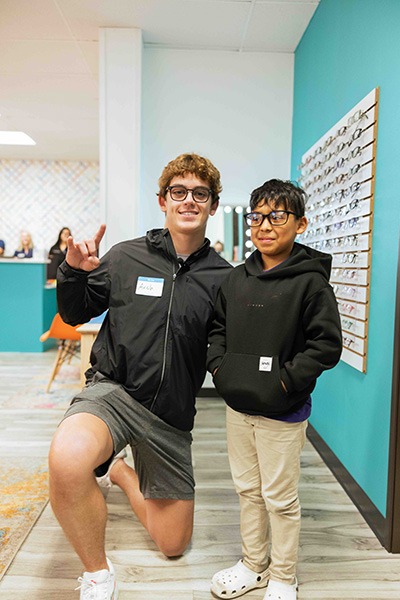
On a warm fall day last November, a group of 25 elementary students on a field trip to the half Helen Eye Clinic were given the surprise of a lifetime when Arch Manning, one of college football’s biggest stars, arrived.
The University of Texas quarterback stepped out of the car and met the group with a smile. As a brand ambassador for American eyewear brand Warby Parker, his presence was possible because half Helen was the only nonprofit eye care provider in Central Texas that distributed its frames.
Naturally, there were a handful of shocked faces.
What the young students quickly realized, however, was that the much-hyped NFL prospect was more like them than they realized.
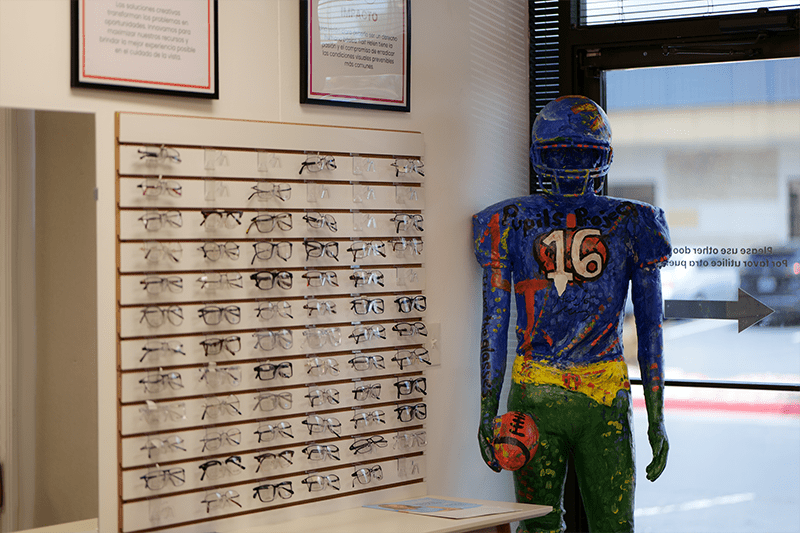
“(Arch) recalled growing up how blurry his vision was and how difficult it was not to see,” said Chelsea Elliott, half Helen’s founder and executive director. “That’s why glasses and his partnership with Warby Parker were so important to him—because vision care access to children can be an instant game changer.”
Providing eye care in Travis County
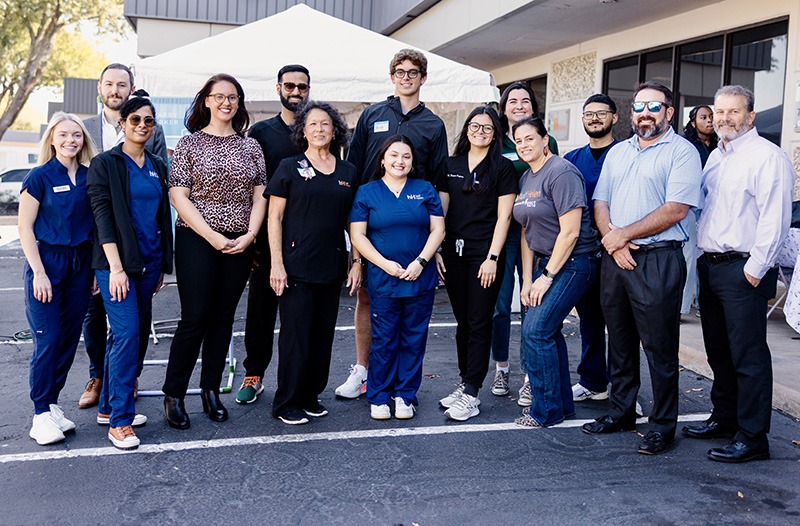
In 2026, the half Helen Eye Clinic turned 13 years old. With close to 4,000 encounters per year, the nonprofit now serves patients across four Central Texas counties (Travis, Williamson, Bastrop, and Hays) and offers eye exams and in-office care treatments for a wide range of eye issues such as glaucoma, diabetic retinopathy, and pediatric care.
Another major benefit is its wide selection of frames and optical grades, from anti-reflective to progressive to transition lenses.
A big reason for its recent growth, Elliott says, is because of a service agreement in 2024 that made the clinic an in-network optometry practice for patients with MAP (the Central Health Medical Access Program) and MAP Basic, two coverage options for Travis County residents with low income.
Previously, the clinic was also the eye care provider of CommUnityCare Health Center’s vision voucher program, which was funded by the St. David’s Foundation. In truth, that’s really when half Helen’s connection with the Central Health system began. Today, more than 70% of half Helen’s patients are covered by MAP, Elliott said.
The impact of that connection has been a shift in care: from mostly pediatric clients to middle-aged adults and seniors. Today, the nonprofit serves patients of all ages, from as young as three to nearly 100.
“I think one really important thing we learned about accessibility is that it wasn’t just about location, It was how often we were there.” – Dr. Mutahir Ahmad
“We’re becoming that eye care home,” said Dr. Mutahir Ahmad, who is one of three optometrists on staff at half Helen.
When the mission first began
When Elliott was four years old, she failed a vision test and learned that she was blind in one eye. Two years later, a hearing test indicated she was deaf in one ear.
She did not fret.
“When I learned about Helen Keller, I very boldly declared that I was half blind, half deaf—like half Helen,” said Elliott, who has a rare eye condition called Coats Disease.
That became her nickname, and later, the genesis for her nonprofit.
In 2013, when Elliott graduated from St. Edward’s University, her first step into adulthood was forming the nonprofit organization that stands today. Her long-term goal was to provide vision and hearing screenings to young children from lower income families without access to health care.
Over a decade later, the eye clinic continues that mission.
“half Helen is truly an evolution of our patient’s needs,” she said. “The hours that we are available are a reflection of what our patients need.”
A permanent home
A huge catalyst for half Helen’s growth has been its move to a permanent location. After three years operating as a mobile clinic across various locations in Central Texas, the organization moved into an office off North Lamar Boulevard in August 2024.
“Because our patient demographic changed drastically from pediatric to family care, we needed the space and resources to help them,” Elliott said.
Optical Prime, “a tiny house on wheels” that delivered vision screenings, eye exams, and fitted patients for eyeglasses from 2021 to 2024, was parked in the interim.
The office gave the clinic an opportunity to better serve its patients for more complex, underlying issues while also becoming a home for annual eye exams, routine checkups, and questions about prescriptions.
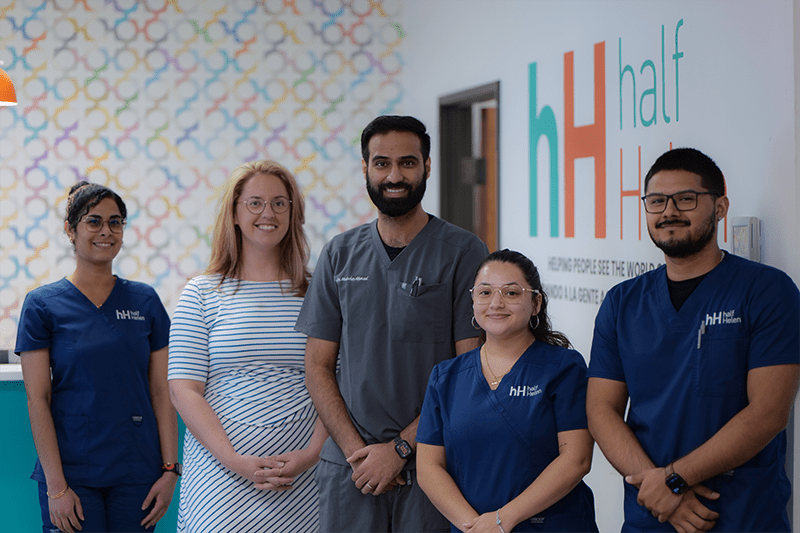
“I think one really important thing we learned about accessibility is that it wasn’t just about location,” Dr. Ahmad said. “It was how often we were there.”
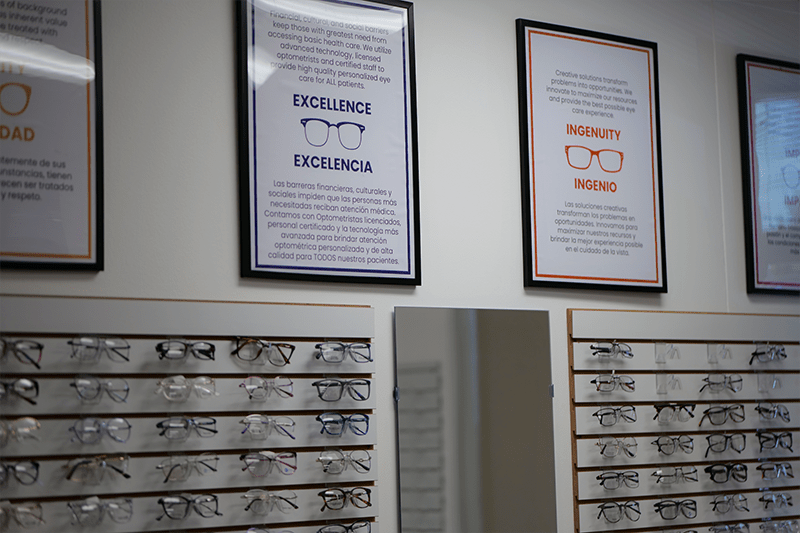
Quickly, half Helen outfitted the office with state-of-the-art equipment, pre-test rooms, and an array of eyewear options for patients.
अगाडि हेर्दै
Manning’s visit last year only reaffirmed the organization’s mission to serve its community. The day included a host of activities, from eye exams to testing out eyeglasses.
Manning, of course, tossed the football with a few eager fans.
But the event was also a reminder of the many ways the clinic was working to provide better care for the community, from new programs to partnerships to funding for those who cannot afford it.
Dr. Ahmad says there are countless stories he could tell.
On any given day, he might help an older patient understand their need for eyeglasses for the first time. He might help a child better traverse the world with limited sight.
In one memorable case, he says, a patient was given hope after two local organizations stepped up to fund a crucial surgery. Another instance saw a 5-year -old with severe vision impairment granted access to better treatment.
Elliott keeps her optimism visible, too.
Inside her clinic, there’s a rectangular yellow sign with blue lettering that spells out “#Believe” above a door frame—a nod to the TV series Ted Lasso.
The show is less about soccer than it is about people being good to each other, about optimism for better days ahead.
That’s essentially what half Helen is all about, too. Its tagline is, “Helping people see the world clearly.”
“We’re extremely grateful to be part of the Central Health system, because it allows us to do so much more for our members,” Elliott said. “We’re making benefits like medical eye care and diagnostic testing available when it hasn’t before.”